Publishes context and answers
Keeps evidence connected to its source and publishes the side's answer.
Tinny brings context, a second look, and a clear next action to your task.

Start with what you want to make, solve or understand.
Each battle in the ring compares answers from two sides.
Accepted findings reach the answer, code or document.
Take the next step, with the context that supports it.
Build and test, or research and decide. Within a task, CANs keep accepted context connected from your goal to the next action.
Publishes context and answers
Keeps evidence connected to its source and publishes the side's answer.
Publishes context and answers
Keeps evidence connected to its source and publishes the side's answer.
Publishes context and answers
Keeps evidence connected to its source and publishes the side's answer.
Meet Tinny and the cards that keep your work connected.
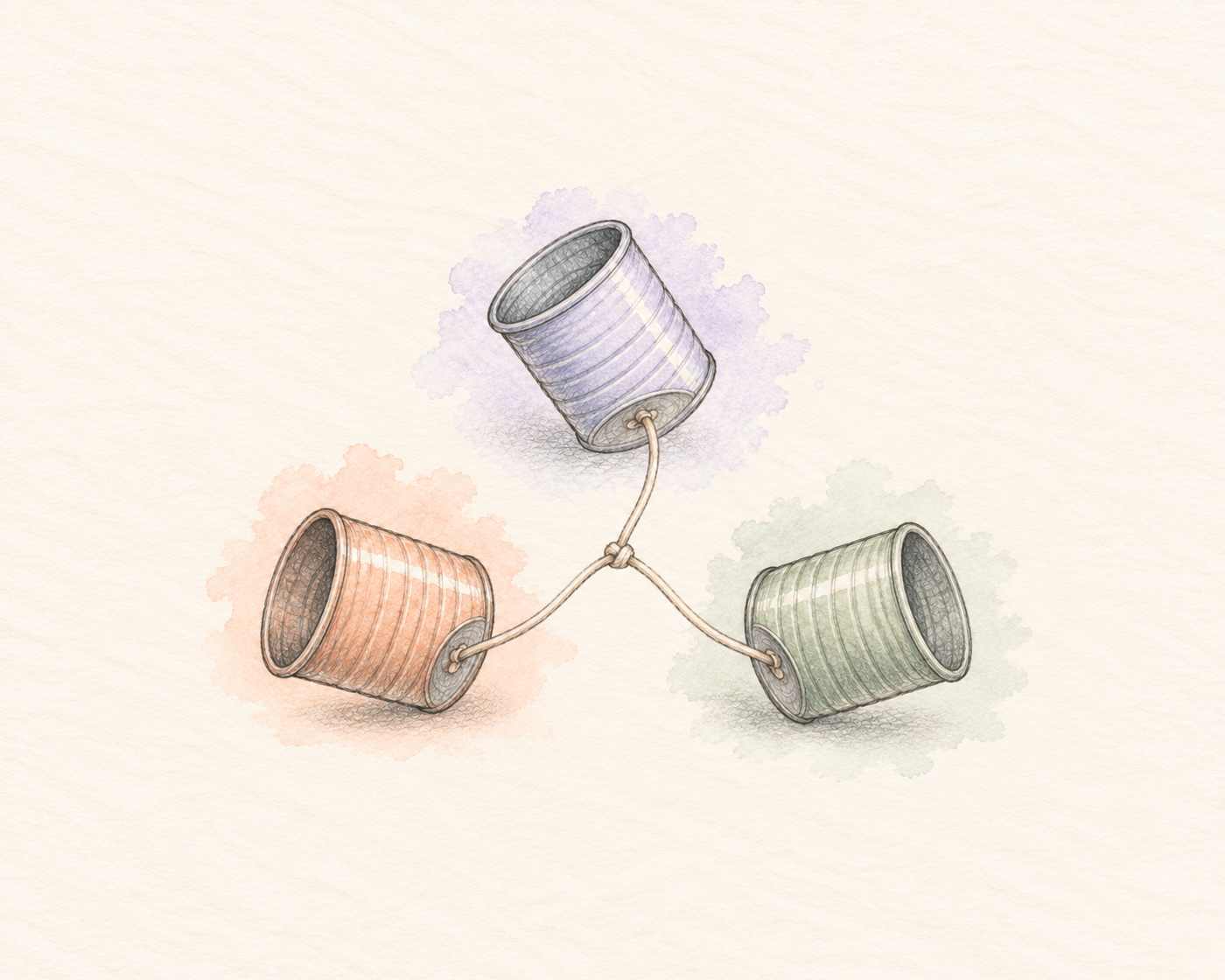
Tin is the workspace. Tinny is your agent. CANs keep the context connected.
Start with a goal. Give an idea a second look. Keep the useful findings with the work, and carry them into your next action.
Tin market is the other side of Tinny. A local market for crafts, repairs, spare parts and requests. Every shop has a real person and a Tinny who answers for it.
tinny.dev is the workshop. market.tinny.dev is the street.